Helmet Fitting Guide
A proper fit is essential for both safety and comfort. A helmet that is too tight can cause discomfort, while one that is too loose may fail to protect you in an impact or shift while riding.
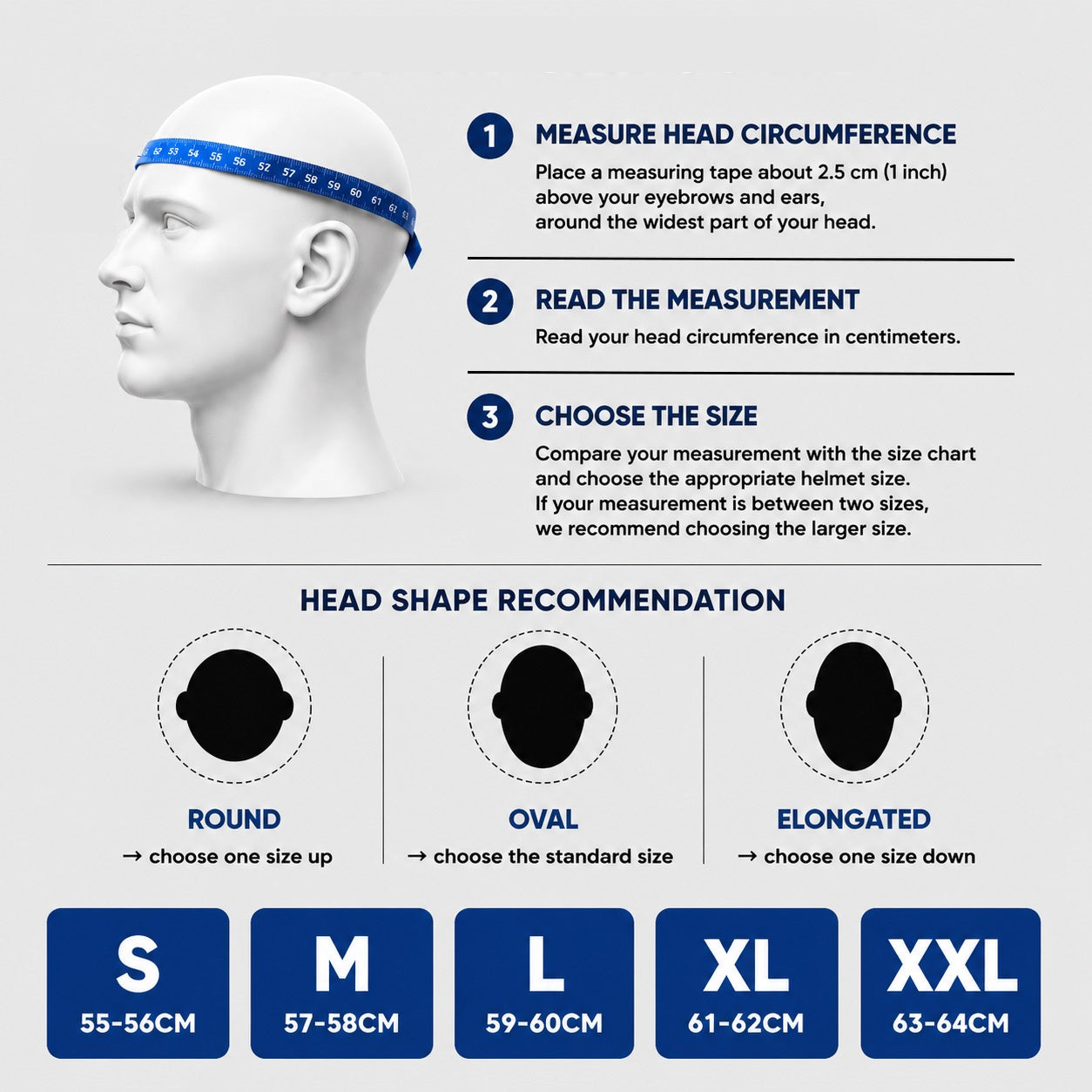
Measure your head size. (Before purchase)
Before choosing your helmet size, measure your head circumference accurately. Use a soft measuring tape and wrap it around the widest part of your head — approximately 1–2 cm above your eyebrows and just above your ears.
Keep the tape level and snug, but not tight. Record the measurement in centimeters and compare it with our size chart.
Try on and check your helmet fit. (Upon delivery)
Before checking the fit, make sure the helmet is positioned correctly.
1. Hold the chin straps out to the sides while pulling the helmet down over your head, ensuring the straps do not get trapped inside.
2. Make sure your head is fully seated inside the helmet and the comfort liner is in contact with the top and sides of your head. The cheek pads should provide firm but comfortable contact with your cheeks.
3. A properly fitted Rymic helmet should feel snug and secure, with fairly even pressure distributed around the sides and top of your head.
✅ Correct Fit Indicators:
- Even Pressure: The cheek pads should rest firmly and comfortably against your cheekbones without causing sharp pain or severe discomfort.
- Skin Traction: When you grip the helmet firmly and attempt to move it up, down, or side-to-side (without moving your head), your skin and hair should move with the helmet.
- Chin Strap Clearance: With the strap securely fastened, you should be able to fit comfortably one to two fingers between the strap and your chin.
❌ Incorrect Fit Indicators:
- Too Loose: The helmet easily shifts or shakes independently from your head without pulling your skin, or there is excessive internal space.
- Too Tight: You experience sharp pressure points, headaches, or severe pain. (Check for skin coloration or deep red indentations on your forehead and cheeks shortly after removing the helmet).
Perform the safety retention tests.
Never skip these critical safety checks before taking your first ride.
The Roll-Off Test:
- Fasten your chin strap securely.
- Reach over the top of the helmet, grab the bottom rear edge with your fingers, and try to roll the helmet forward off your head.
- If the helmet comes completely off or comes dangerously close to slipping off, the helmet is too large and you must downsize.
Rotational Stability Test:
Try rotating the helmet side-to-side and forward. It should remain firmly anchored in place.
The break-in period. (First rides)
A brand-new helmet may feel slightly tight or stiff during your first few rides. The internal comfort liner is designed to gradually adapt and conform to your unique head shape over regular use.
However, your helmet should never cause:
- Sharp pressure points
- Headaches
- Pain or discomfort
A properly fitted helmet should feel secure, comfortable, and stable throughout your ride.
⚠️ IMPORTANT SAFETY NOTICE: If you cannot achieve a secure and proper fit following these steps, DO NOT USE THE HELMET. An improperly fitted helmet may compromise protection and increase the risk of serious injury. Always choose the correct size for optimal safety, or contact RYMIC for assistance.